
For many years, plastic packaging was the standard choice for restaurant takeout and delivery. It was inexpensive, lightweight, easy to store, and available in almost every size.
But the food-service market is changing.
Restaurants across the United States are reviewing how they package meals, drinks, sides, desserts, and delivery orders. Many are reducing their dependence on single-use plastic and moving toward paper food packaging, kraft paper food boxes, molded fiber containers, paper cups, and other practical alternatives.
This change is not happening for one reason alone. Restaurants are responding to waste concerns, changing local rules, customer expectations, supplier requirements, and the need for packaging that performs well while presenting the brand professionally.
I really don't think paper based products for everything . However, when it is properly selected, tested, and sourced, it can give restaurants a practical way to reduce unnecessary plastic without lowering food quality or disrupting service.
Plastic Packaging Creates a Long-Term Waste Problem
Most restaurant packaging is used for a very short period. According to the survey it takes about 20 to 30 minutes to consume something, after that they throw away the container or maybe the cup and other food packaging.
The packaging is temporary but when we throw it, it is there for an eternity.
The U.S. Environmental Protection Agency identifies containers and packaging as a major part of municipal solid waste. The EPA also lists takeout containers, straws, stirrers, bottles, caps, and carryout bags among the single-use food-service plastics that contribute to plastic pollution.
Plastic products can also be confusing for customers. A recycling symbol or resin number does not automatically mean that a local recycling program will accept the item. Rules are not the same everywhere; some states may have different rules for this. Some plastic food containers are rejected because of their resin type, size, color, food residue, or a combination of materials.
As restaurants produce hundreds or thousands of takeout orders every month, even a small packaging decision can create a large amount of waste over time.
Packaging Rules Are Changing Across the United States
There is no single nationwide ban covering all plastic restaurant packaging. Instead, restaurants face a growing mix of state laws, city ordinances, material restrictions, foam bans, plastic bag rules, straw requirements, and packaging-reduction programs.
This creates a difficult situation for restaurant groups operating in more than one city or state. A container that is acceptable at one location may create a compliance problem at another.
Waiting until a new rule is enforced can also make the transition more expensive. Restaurants may be forced to change suppliers quickly, accept limited product availability, retrain employees, or purchase packaging without enough time to test it.
A planned transition gives an operator more control. The restaurant can review current inventory, identify high-plastic categories, test replacements, compare case quantities, and update purchasing procedures before an urgent change is required.
For this reason, many restaurants are treating packaging as a procurement and operations issue, not simply an environmental decision.
Paper Food Packaging Has Become More Practical
Older paper containers did not always perform well with oily, hot, wet, or heavy meals. Operators often experienced leaks, weak corners, lids that did not fit correctly, and containers that lost their shape during delivery.
Modern paper food packaging has improved.
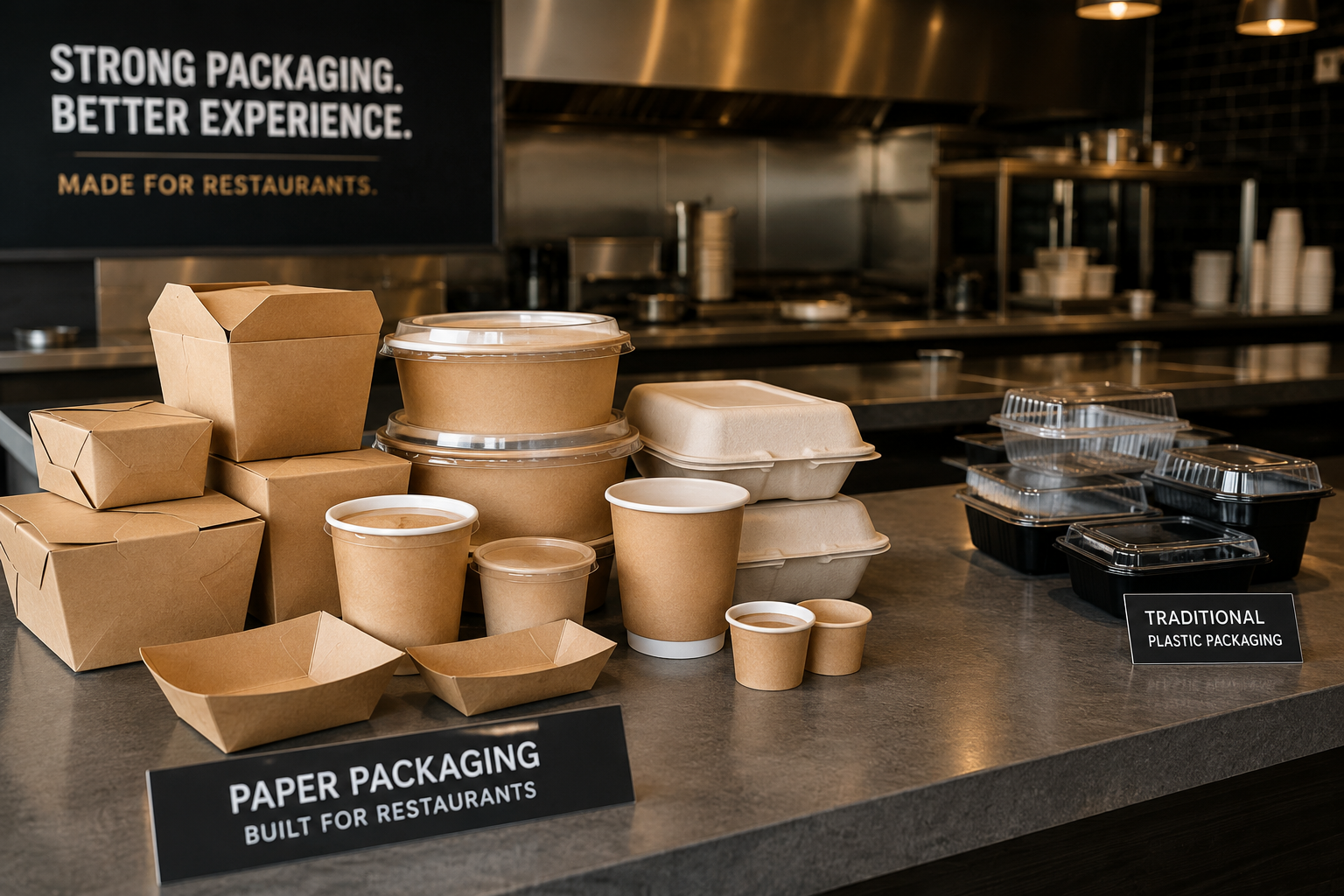
Restaurants can now choose from:
-
Round paper food containers
-
Paper soup cups with fitted lids
-
Kraft paper food boxes
-
Single- and double-compartment lunch boxes
-
Paper bowls for hot and cold meals
-
Paper cups for cafés and beverage service
-
Kraft paper trays for pastries and side dishes
-
Paper-based sushi trays
-
Molded-fiber plates and clamshell containers
-
Custom printed paper food containers
The right container can provide grease resistance, leak resistance, stickability, secure closure, and reliable performance during takeout and delivery.
Oz & Ounces offers a wide range of biodegradable food packaging products, including bowls, paper food containers, kraft paper food boxes, transparent cups, sushi trays, and clamshell containers. The company also provides customizable packaging solutions for restaurants, cafés, catering businesses, and other food-service operations.
Paper Packaging Can Improve the Takeout Experience
Restaurant packaging has one main job: it must protect the food.
Packaging is not good for restaurants if it leaks, collapses or get soggy or opens during delivery, and if it is not good with hold and cold things.
That is why restaurants should go with good paper based food packaging that should go with the specific dish, not with everything.
A soup restaurant will require a secure, round, paper-based container with tight fitting lids. A bakery may need lightweight kraft paper trays that protect pastries while improving presentation. A catering company may need large paper food boxes that can hold full meals. A café may require insulated paper cups that remain comfortable to hold.
Paper packaging can work well when the size, structure, coating, lid, temperature rating, and food type are properly matched.
The best approach is to test a sample with the actual food. Fill the container, close it, stack it, carry it, and leave it packed for the same amount of time as a normal delivery order. This simple test can prevent expensive complaints later.
Restaurants Are Paying More Attention to PFAS
PFAS have been used in some paper and paperboard packaging to provide resistance against grease, oil, and moisture.
In February 2024, the U.S. Food and Drug Administration announced that manufacturers were no longer selling grease-proofing substances containing PFAS for food-contact use in the U.S. market. In January 2025, the FDA also determined that related food-contact authorizations were no longer effective.
This development has increased attention on PFAS-free food packaging and supplier documentation.
Restaurants should not rely only on a green color, kraft appearance, leaf symbol, or general environmental statement. Procurement teams should ask suppliers for clear material information and relevant certifications.
Useful questions include:
-
Is the packaging PFAS-free?
-
Is it approved for direct food contact?
-
What temperatures can it safely handle?
-
Is it suitable for hot, cold, oily, or acidic foods?
-
Is the product microwave-safe?
-
What material is used for the internal barrier?
-
Is the item recyclable or compostable in the intended market?
-
Are supporting certificates available?
-
Does the lid use the same material as the container?
These questions help restaurants choose packaging based on documented performance instead of appearance.
Paper Packaging Can Support Better Branding
A plain plastic container often looks similar to packaging used by many other restaurants. Paper food packaging offers more opportunities for color, printing, texture, shape, and brand presentation.
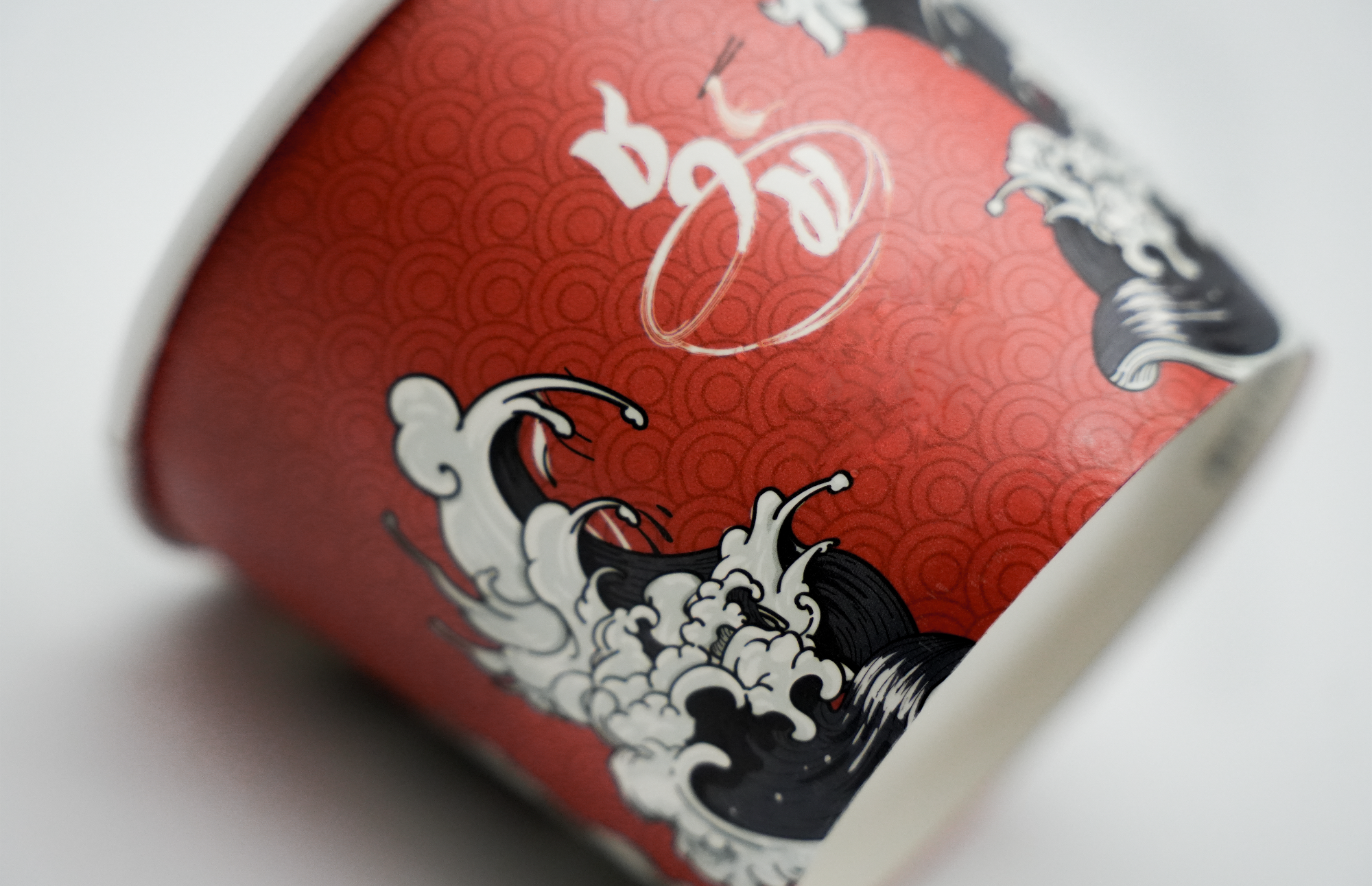
Custom-printed food packaging puts a restaurant’s name or logo directly into the hands of its customers.. This is especially useful for takeout, office catering, food delivery, cafés, bakeries, and restaurant groups that want a consistent appearance across several locations.
The packaging becomes part of the meal experience.
A well-designed paper cup, kraft food box, or printed paper bowl can help customers remember where the order came from. It can also make delivery orders look more organized and professional when customers share them in photos or videos.
Oz & Ounces helps businesses create packaging that feels unique to their brand. Restaurants and food-service companies can choose options such as printed logos, custom dimensions, and different finishing styles to match their products and overall brand image.
Paper Is Not Automatically Sustainable
Restaurants should avoid replacing one problem with another.
Not every paper container is recyclable. Some products use plastic coatings, mixed-material lids, heavy inks, or barriers that may affect how the item is processed after use. Paper packaging that comes into contact with food may not be accepted for recycling because of contamination.
Compostable packaging also requires the correct disposal system. A product designed for commercial composting may not break down properly in a landfill or a home compost pile.
The Federal Trade Commission advises businesses to support and clearly qualify environmental claims such as “recyclable,” “compostable,” and “degradable.” A business should not make a broad claim when disposal facilities are unavailable to a substantial number of customers.
A more responsible message is specific.
Instead of saying, “Our packaging is completely green,” a restaurant can say:
Our selected takeout containers are made from paper-based materials and contain no intentionally added PFAS. Disposal and recycling options may differ depending on local facilities and regulations.
Clear language builds more trust than an exaggerated environmental claim.
Paper and Plastic Should Not Be Treated as an All-or-Nothing Choice
For many restaurants, the best transition is gradual.
A business does not need to replace every plastic item on the same day. It can begin with the categories where paper or fiber packaging already provides reliable performance.
Good starting categories may include:
-
Soup and side containers
-
Hot-food bowls
-
Lunch boxes
-
Bakery and pastry trays
-
Coffee and hot-drink cups
-
Takeout meal boxes
-
Plates
-
Clamshell containers
-
Catering boxes
-
Sushi bases and trays
Some products may still require clear visibility, resistance to unusual temperatures, or a specialized barrier. The goal should be to reduce unnecessary plastic while protecting food quality, customer safety, and restaurant operations.
This is a stronger strategy than choosing packaging only because it appears environmentally friendly.
How Restaurants Can Make the Switch
A successful packaging transition starts with information.
1. Audit Current Packaging
List every container, lid, cup, tray, bag, straw, and utensil used by the restaurant. Record the material, size, monthly quantity, supplier, unit cost, and menu purpose.
2. Identify the Highest-Volume Plastic Items
Start with the products used most often. Replacing a high-volume item can create a larger reduction than changing several low-use products.
3. Match Containers to Menu Items
Choose packaging based on heat, grease, moisture, portion size, delivery time, stacking, ventilation, and reheating requirements.
4. Request Samples
Test the packaging during actual restaurant service. Do not make a large purchase based only on a catalog photo.
5. Review Lids and Compatibility
A container is only useful when the correct lid is available. Confirm the fit, material, case quantity, and availability of replacements.
6. Check Supplier Documentation
Ask for food-contact information, PFAS statements, material specifications, certifications, and disposal guidance.
7. Compare the Total Cost
Do not compare only the price of one container. Consider lid costs, case quantities, storage space, damaged orders, leakage, staff handling, customer complaints, and supplier reliability.
8. Train Employees
Show employees which container to use for each menu item. Clear procedures reduce waste and prevent incorrect packaging during busy hours.
The Future of Restaurant Packaging Is More Considered
Plastic packaging will not disappear from U.S. food service overnight. However, restaurants are becoming more selective about when and why they use it.
Operators are looking for packaging systems that protect food, support takeout and delivery, meet changing requirements, strengthen presentation, and reduce unnecessary waste.
Paper-based packaging can meet many of these needs when it is sourced carefully and tested properly.
The strongest transition is not simply “plastic out, paper in.” It is a planned packaging system built around the restaurant’s menu, service model, delivery conditions, compliance needs, and purchasing volume.
Restaurants that begin reviewing their packaging now will be in a better position to control costs, avoid rushed supplier changes, and prepare for future requirements.
Find the Right Paper Food Packaging for Your Restaurant
Oz & Ounces supplies restaurants, cafés, catering companies, food-service operators, and multi-location businesses with premium food packaging solutions.
Our range includes bulk paper food containers, paper bowls, kraft paper food boxes, paper cups, trays, sushi packaging, plates, biodegradable clamshells, lids, and customizable packaging.
Restaurants in Virginia, Maryland, Washington, D.C., and the wider DMV area can also request product information, samples, or a private packaging presentation.
Review your current packaging before the next requirement, shortage, or supplier change forces you to make a rushed decision. Contact Oz & Ounces to discuss your menu, packaging volume, and replacement needs.




Share: